
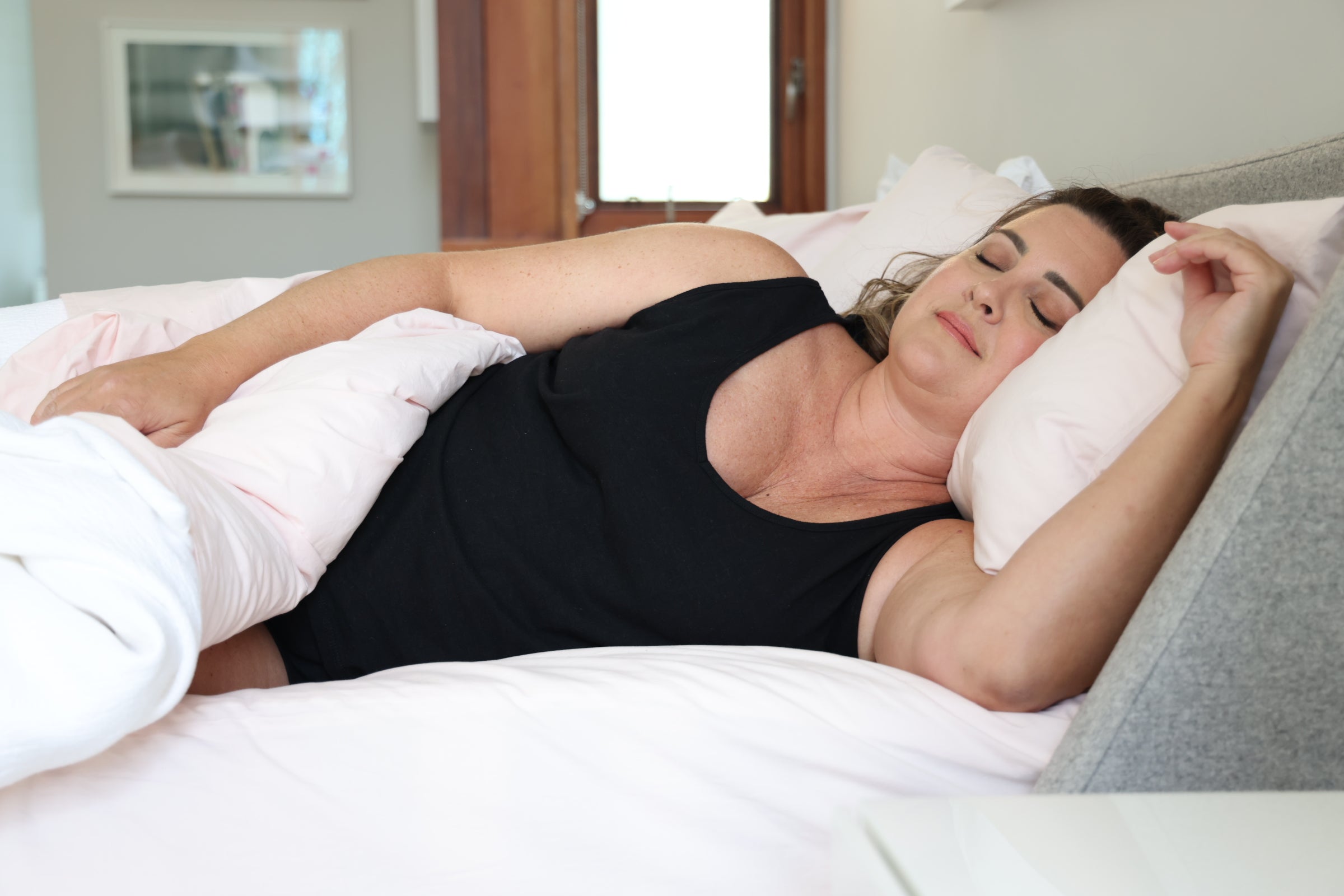

Why Night Sweats Disrupt Sleep
Night sweats aren’t just about feeling too hot.
They usually follow a heat–moisture–chill cycle:
- Your body releases heat and sweat
- Moisture becomes trapped against the skin
- As that moisture cools, you wake up feeling clammy, chilled, or uncomfortable
This cycle is what causes repeated wake-ups, restless sleep, and unrefreshing nights.
A cooler bedroom can help reduce night sweats triggers. For many people, a sleep temperature between 16–20°C supports more stable rest.
But the room is only part of the equation.
What happens underneath the covers, and fabrics in direct contact with your body, play a critical role.

How Fabrics Affect Night Sweats and Sleep
Most advice focuses on fans, air conditioning, or “cooling” products. What’s often overlooked is how fabrics handle moisture once sweating begins.
Many moisture-wicking or synthetic fabrics:
- Don’t absorb sweat
- Trap heat once wet
- Leave moisture sitting on the skin
That trapped moisture is what leads to clamminess, chills, and sleep disruption.
Certain types of natural fibres inherently absorb, release, and regulate moisture and tend to support steadier temperature control. Instead of forcing constant cooling, they allow your body to adjust through the night by flattening the peaks and valleys of your night sweats.
This is why sleepwear and bedding fabrics matter — often as much as the thermostat itself.

Our Approach to Night Sweats Sleep
At CoolYourSweats, we design sleepwear for how the body actually behaves during night sweats — not for generic “hot sleepers.”
Our approach is intentionally different:
- We prioritize moisture management before cooling, because staying dry helps reduce and lessen chills and repeated wake-ups
- We use natural fibres, specifically hemp combined with organic cotton, chosen for their ability to absorb and release moisture and heat
- We design sleepwear as the first line of defence, knowing it sits closest to the skin
- We believe education matters, so that you feel empowered to make the best decisions to stay dry at night.
- We rely on transparency, testing, and a generous wear-it-and-love-it guarantee — not hype or exaggerated claims
Better sleep doesn’t come from miracle solutions.
It comes from thoughtful design and informed choices.
Sleepwear Designed for Night Sweats Sleep
-

Fabric that offers cool comfort


Fabric guide to better sleep
Learn More About How Fabric Affects Night Sweats
If you want to understand the “why” before choosing any product, we’ve created a free fabric guide to help.
You’ll find guidance on:
- Night sweats and moisture
- Which fabrics support better sleep
- How sleepwear, bedding, and layering work together

Read our blog
Stay dry at night - even with night sweats
In addition to the fabric guide, we've written several articles on why night sweats happen and several solutions for helping you sleep better so you can be your best self.
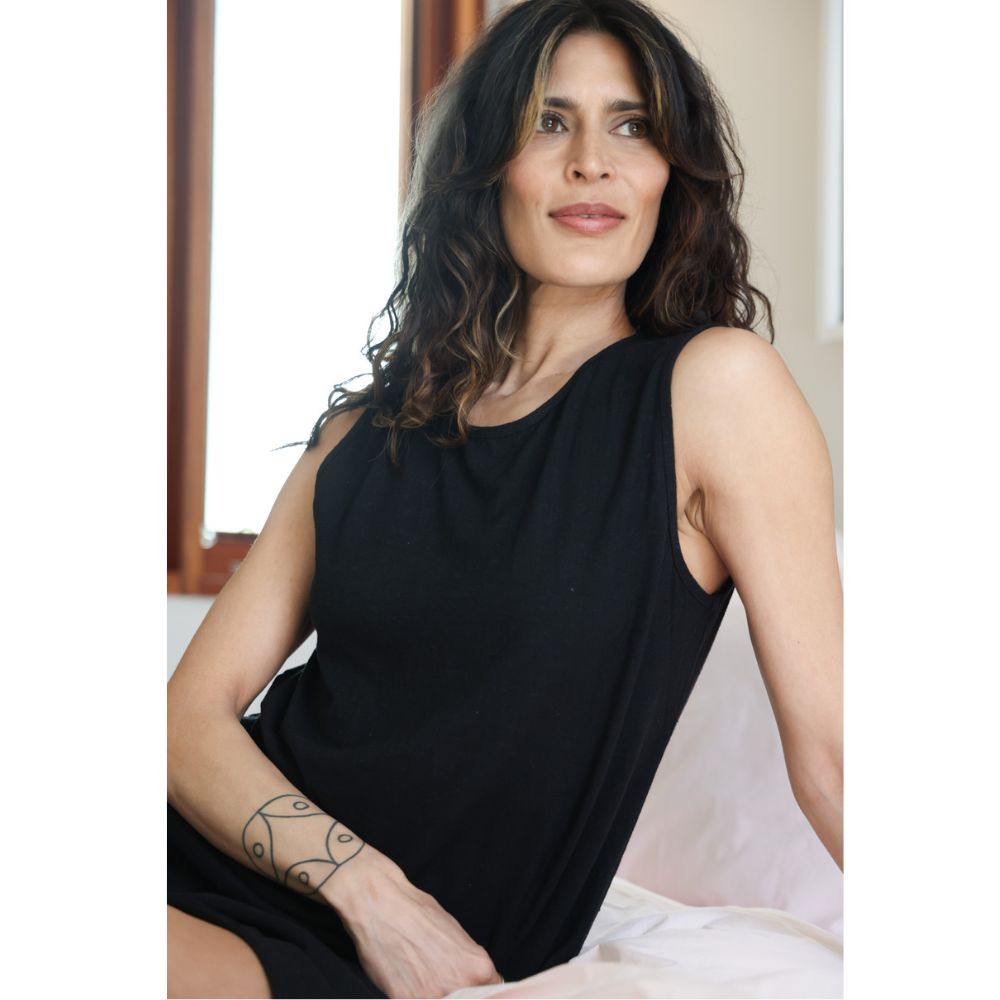
A Calm Next Step
You don’t need extreme solutions to sleep better. Often, small, informed changes — especially around fabrics and moisture management — can noticeably reduce nighttime discomfort.
Whether you choose to learn more, explore sleepwear, or return later, this space is here to support better sleep with clarity and respect.
Explore Sleepwear for Night Sweats for Better Sleep
-
Robe/chemise de nuit « Simone » à évacuation d'humidité
Prix habituel $129.99 CADPrix habituel -
Débardeur et short « Vanessa » PJs à évacuation d'humidité
Prix habituel $147.98 CADPrix habituel


